

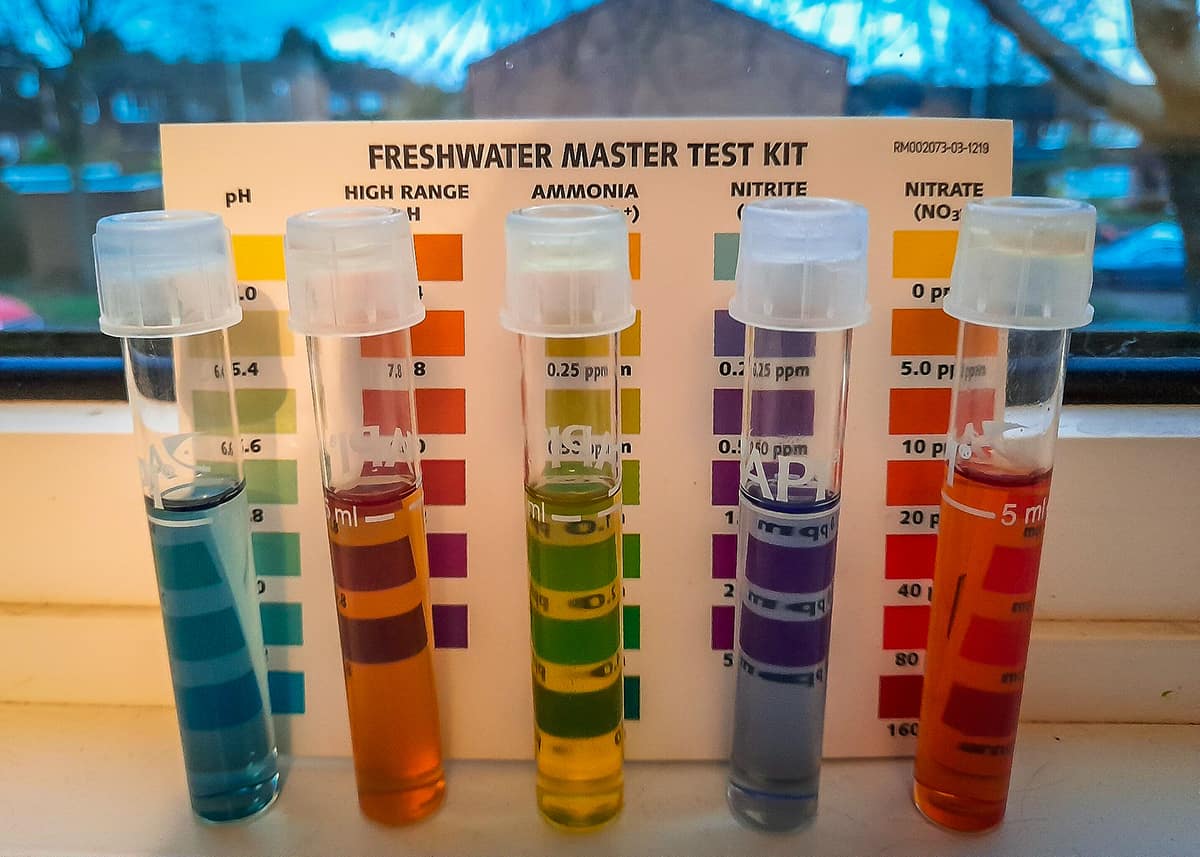
One of the first homeowners I worked with who used at-home tests had just moved into an older house on city water. They showed me a multi-parameter strip with several colors lit up and were convinced their water had “gone bad.” The reality was far less dramatic. The test confirmed moderate hardness, normal chlorine levels, and a slightly alkaline pH—exactly what I’d expect for that area. The test wasn’t wrong. The problem was that no one had explained how to read it in context.
Most simple at-home tests are screening tools, not diagnostic tools. Hardness strips are good at confirming why you’re seeing scale on faucets or soap not lathering well. Chlorine tests explain sharp tastes or that swimming-pool smell in the shower. Basic pH tests can hint at why pipes might corrode faster or why fixtures discolor over time. I’ve found these especially useful for spotting trends. A homeowner on a private well once showed me a series of old strip tests they’d saved over a year. Iron readings had slowly crept up, which lined up perfectly with the new orange stains appearing in their sinks.
Where people get into trouble is assuming these tests tell the whole story. Color-based strips rely heavily on timing and lighting. I’ve watched two people look at the same strip and argue over which shade it matched. Digital meters feel more authoritative because they give you a number, but that number can be misleading. I’ve had countless conversations where someone panicked over a TDS reading without realizing that total dissolved solids doesn’t tell you what those solids are. Calcium and magnesium are very different from nitrates or sodium, but they all raise the same number.
Another limitation is what these tests simply don’t measure. Most at-home kits won’t detect bacteria, lead, pesticides, or many organic contaminants. I once worked with a family whose strip tests looked perfectly normal. The water ran clear, tasted fine, and checked every box on their kit. A lab test later showed bacterial contamination that explained recurring stomach issues. Without professional testing, they would’ve assumed the water was safe indefinitely.
I’ve also seen homeowners chase expensive or unnecessary solutions based on a single test result. A slightly low pH sends them shopping for neutralizers when the real issue is aging copper pipes. A hardness reading leads to oversized filtration systems when a simple softener—or even targeted fixture maintenance—would have done the job. In my experience, at-home tests should guide questions, not dictate purchases.
That doesn’t mean I discourage using them. I actually prefer when people come to me with test results in hand. It tells me they’re paying attention to their water. These tests are excellent for confirming obvious issues, tracking changes over time, and deciding whether further testing makes sense.
The key thing I’ve learned over the years is that water problems are rarely explained by a single number or color change. Plumbing materials, water source, treatment equipment, and daily usage all interact in ways that simple tests can’t fully capture. At-home tests give you a snapshot, not the full picture.
Used correctly, they can save time and reduce guesswork. Used alone, they can create unnecessary worry or false confidence. Their real value isn’t in the strip or the meter—it’s in knowing how far you can trust the result, and when it’s time to look deeper.